
Why I watched «Fight Club» 14 times?
I agree that I watched it a lot. But I have looked in different situations and periods. Fight Club took a place in my mind, and that place will never be forgotten. Each time I looked at it, I understood the causes of my problems and solved them. In many cases, that film was able to free me from loneliness and helplessness. My life changed, I decided to get rid of social traps and tried to be different from others. Finally, I was able to live independently, not depend on others and find myself. My taste, my clothes, my lifestyle changed. I started to workout, read books and be more precious and charismatic. Fight Club is a must watch for every man because when you follow Tyler’s philosophy you start to enjoy life no matter the problems.
Start
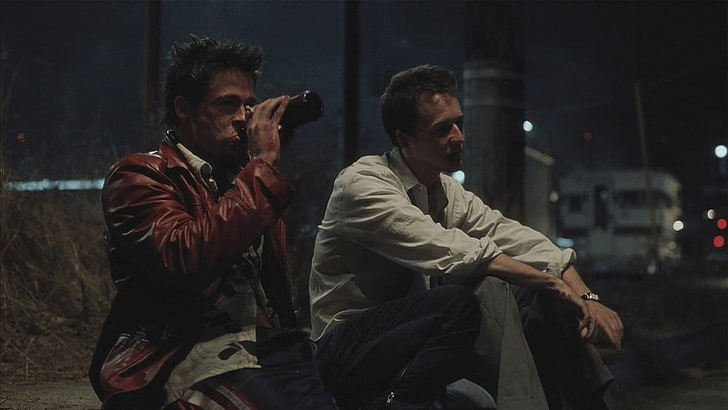
Fight Club begins with an unnamed narrator who is struggling with insomnia. His life is consumed by consumerism and materialism, working a soulless job at a major car company, where his role involves inspecting faulty vehicles and deciding which ones should be recalled. He spends his days attending support groups for various afflictions like cancer and anxiety, even though he doesn’t suffer from them. These groups offer him a sense of temporary relief, as he connects with others in pain, but they never provide lasting peace. Eventually, he becomes desperate for a way to escape the emptiness of his life.
On a business trip, the narrator meets Tyler Durden, a charismatic and free-spirited soap salesman who has an anarchistic and anti-materialistic view of life. Tyler’s philosophy is grounded in rejecting societal norms and the consumer-driven culture that has imprisoned individuals into shallow lives. The narrator is intrigued by Tyler’s confident, rebellious attitude and sharp insights into the emptiness of modern existence. Together, they come up with an idea that will help them both break free from the constraints of the world they live in: Fight Club.
Fight Club starts off small, with Tyler and the narrator organizing underground, secret meetings in abandoned buildings, where men come together to fight one another. These fights serve as a form of catharsis for the participants, allowing them to release built-up frustrations, confront their fears, and feel alive in a world that has stripped them of a sense of purpose. Tyler teaches the men to embrace pain and violence, which he believes will help them rediscover their true masculinity, a masculinity he feels has been lost in a world that values comfort, wealth, and status.
The club grows rapidly, drawing in more men, each struggling with their own issues of identity, masculinity, and self-worth. As the club expands, Tyler’s philosophy becomes more radical and increasingly dangerous. He encourages the members to break free from societal expectations entirely, rejecting not just consumerism but also law and order. This culminates in the formation of Project Mayhem, an even more secretive and militant organization designed to bring about chaos and destruction. Tyler and his followers begin engaging in increasingly violent and illegal acts, from vandalism to terrorism, all in an effort to «wake up» the world from its slavish devotion to materialism.
As the events of Fight Club spiral out of control, the narrator starts to feel more and more uncomfortable with the direction Tyler is taking. Tyler’s leadership grows stronger, and the narrator feels increasingly alienated from him. The more the narrator tries to distance himself from Tyler’s plans, the more Tyler’s influence seems to consume him. Their relationship grows tense, and the narrator becomes more desperate to reclaim control of his life.
In the midst of this chaos, the narrator’s mental state begins to deteriorate. He starts to question his own sanity, as he notices strange occurrences and becomes unable to trust his own perceptions. At one point, he even finds himself in situations where he doesn’t remember what has happened, or where he is uncertain whether the events unfolding are real. As the narrator grows more confused, he begins to suspect that something is wrong, but he can’t fully grasp what it is.
The film builds to a powerful and shocking twist: it is revealed that Tyler Durden does not exist at all. Tyler is not a separate person, but rather a figment of the narrator’s imagination. He represents the narrator’s repressed desires and frustrations, the parts of himself that have been suppressed by his mundane existence. Tyler is a manifestation of the narrator’s subconscious yearning for freedom, power, and rebellion, and his actions throughout the film are symbolic of the narrator’s internal battle against the constraints of society.
With this realization, the narrator understands that Tyler’s radical ideas and violent methods were not solutions to his problems, but expressions of his own inner turmoil. The destructive path Tyler has led them down is ultimately a path of self-destruction. To save himself and stop the chaos from continuing, the narrator confronts Tyler in a final showdown, rejecting his influence and asserting control over his own mind. The fight symbolizes the narrator’s struggle to reclaim his sense of self and identity.
The movie ends ambiguously, with the narrator appearing to have regained control of his life, but still unsure of what the future holds. In a final scene, he is seen holding hands with Marla, a woman he had been reluctantly involved with throughout the story, as a series of explosions signal the culmination of Tyler’s plans. The ending leaves open the question of whether the narrator’s actions will ultimately lead to a better world or whether the cycle of chaos and destruction will continue.
Fight Club is more than just a film about fighting—it’s a deep exploration of identity, self-doubt, and the consequences of living in a world obsessed with consumption and superficial success. It critiques the way modern society pressures individuals, particularly men, to conform to unrealistic standards of masculinity and material success, leading to feelings of alienation and frustration. The film also examines the dangers of rejecting societal norms entirely, showing how the pursuit of freedom and meaning can spiral into violence and self-destruction.
Through its dark humor, intense violence, and thought-provoking themes, Fight Club challenges audiences to think critically about the choices they make, the systems they participate in, and the nature of self-identity. The twist ending forces viewers to reevaluate everything they thought they understood about the characters and their motivations, making it a complex, multi-layered narrative that continues to be discussed and analyzed by audiences even years after its release.
Main characters in Fight Club
1. The Narrator (Edward Norton)

The narrator is the film’s protagonist, though his name is never revealed. He is a middle-aged, disillusioned man trapped in the monotony of consumer-driven life. Suffering from insomnia and struggling with a profound sense of dissatisfaction, he seeks comfort in support groups for various ailments. His life changes when he meets Tyler Durden, and they form Fight Club. The narrator represents the everyman, struggling with identity and the pressures of modern society. As the story progresses, it’s revealed that much of what he experiences is a manifestation of his own subconscious.
2. Tyler Durden (Brad Pitt)

Tyler is the charismatic, anarchistic soap salesman who becomes the catalyst for the narrator’s transformation. He is rebellious, confident, and operates on a philosophy of rejecting consumerism and societal norms. Tyler introduces the narrator to Fight Club, and his ideas evolve from a simple underground fighting group to an extreme, terrorist-like organization called Project Mayhem. Throughout the film, Tyler serves as a symbol of the narrator’s repressed desires for freedom and destruction. The twist reveals that Tyler is actually a figment of the narrator’s imagination, representing his suppressed, more anarchic desires.
3. Marla Singer (Helena Bonham Carter)

Marla is a troubled woman who also attends the same support groups as the narrator. She is cynical, disaffected, and emotionally complex, with a chaotic and somewhat destructive personality. Initially, the narrator sees her as an inconvenience and a reminder of his own unhappiness, but over time, they develop a complicated and uncomfortable relationship. Marla becomes intertwined with both the narrator and Tyler, and her presence serves as a symbol of the narrator’s conflicted feelings about intimacy, connection, and his own emotional isolation.
4. Robert Paulson (Meat Loaf)

Robert Paulson, a member of Project Mayhem, is a former factory worker who joins the movement after being recruited by Tyler and the club. He represents the everyman who becomes caught up in the movement’s dangerous and extreme actions. Paulson is often seen as a tragic figure, used by the group for its radical goals. His death becomes a key moment in the film, as his death is followed by the iconic chant «His name is Robert Paulson,» signifying how the group turns individuals into mere symbols rather than real people.
5. Angel Face (Jared Leto)
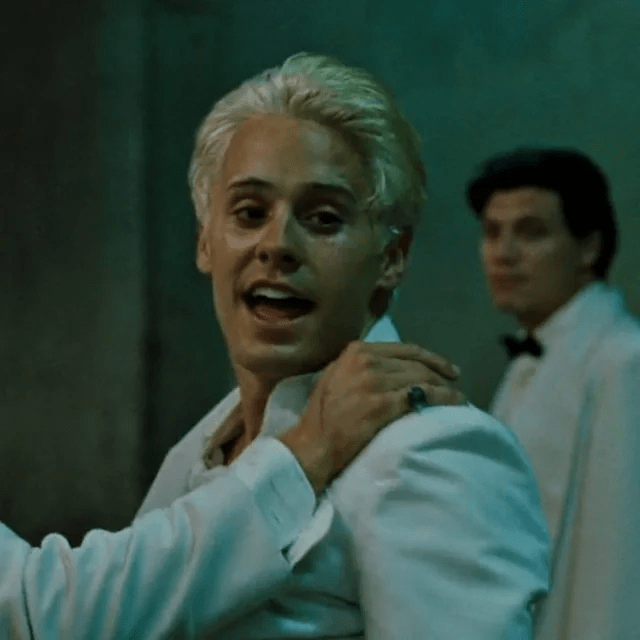
Angel Face is a member of Fight Club, known for his youthful good looks. He becomes a target of the narrator’s jealousy and anger, particularly when Tyler seems to favor him. Angel Face’s role is somewhat minor, but his presence highlights the narrator’s internal conflict and frustration with his own feelings of inadequacy, especially in comparison to the younger, more attractive members of Fight Club.
6. The Narrator’s Boss (Zach Grenier)
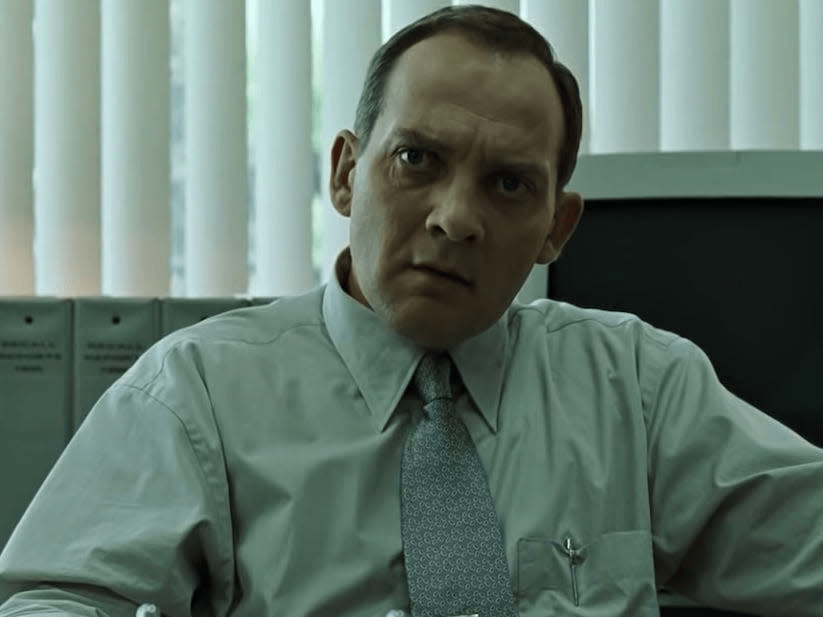
The narrator’s boss is a minor but significant character in the film, representing the corporate world that the narrator feels trapped in. The narrator’s dissatisfaction with his job and his boss’s treatment of him are part of what fuels his desire to escape the pressures of modern, materialistic society. In the film, the boss is portrayed as someone who embodies the greed and inhumanity of the corporate structure, something the narrator comes to loathe.
7. The Mechanic (Richmond Arquette)
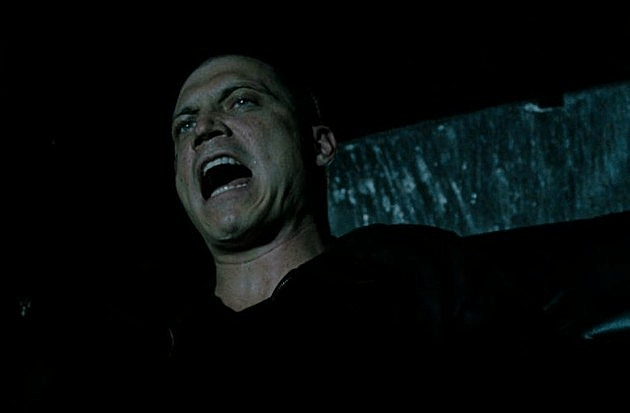
The Mechanic is a minor character in the film, involved with the practical aspects of the underground activities of Fight Club and Project Mayhem. He is one of the people the narrator interacts with during the buildup to the larger scheme, and like many other members of the group, he becomes a part of the movement’s expanding operations.
These characters all interact with each other in ways that reflect the major themes of the film: identity, consumerism, disillusionment, and the search for meaning in an often bleak, materialistic world. The characters help drive the narrative forward, with their conflicts and relationships ultimately leading to the film’s shocking twist and philosophical questions about the nature of self and society.
Interesting facts about «Fight Club»
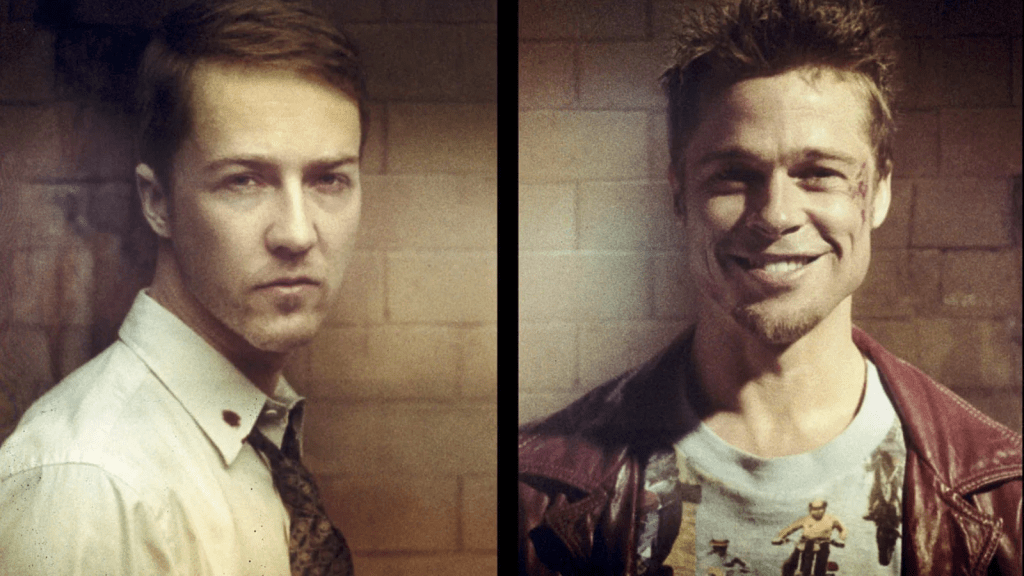
‘Fight Club’ was based on a pretty new book
Sometimes a book adaptation takes a while before it happens. That was not the case with Chuck Palahniuk’s Fight Club. In fact, a potential adaptation was already being bandied about before the book was officially released. Fight Club the novel came out in 1996, and it was announced Fincher would direct an adaptation in 1997.
An unexpected choice was considered for the screenwriter

Fight Club feels very Generation X, so naturally, the first name considered to write the screenplay was a man born in 1930. Buck Henry is a comedy legend. He was one of the first popular Saturday Night Live hosts and co-created the sitcom Get Smart with Mel Brooks. On top of that, he had quite a successful movie writing career, as he wrote The Graduate, among others. Producer Laura Ziskin considered Henry because she felt Fight Club and The Graduate had similar vibes, but Jim Uhls got the role. By the way, don’t think Henry didn’t have a dark streak that extended into the ‘90s. He wrote the 1995 film To Die For.
Fincher was not the first choice, and he almost turned the movie down

The studio’s first choice to direct Fight Club was Peter Jackson, now best known for the Lord of the Rings and Hobbit movies. However, at the time, he was too busy working on his film The Frighteners. After a couple of other names were considered, Fincher was approached. He was hesitant because his feature film debut was Alien 3, which he had made for Fox. Fincher also hated working with the studio on that movie, so it took them some time to convince the director to finally sign on.
The movie could have been a precursor to ‘Ocean’s 11’

Brad Pitt was a big star by the time he was cast as Tyler Durden, the anarchic figure at the center of Fight Club. He was such a star that he could command $17.5 million coming off the flop of Meet Joe Black . For Edward Norton’s part, the first name considered was Norton’s Rounders costar Matt Damon. Eventually, Pitt and Damon would get to work together in Steven Soderbergh’s Ocean’s films.
Pitt was willing to go all out for the movie

You can’t deny that Pitt was dedicated to the role of Tyler Durden. Believing that the character would not have perfect teeth, Pitt took it upon himself, unprompted, to have his front teeth chipped for the film. Sure, he had his teeth restored after filming ($17.5 million can buy you some nice dental work), but that’s still pretty crazy.
The stars learned to fight…and to make soap

It’s not surprising that Pitt and Norton learned boxing and martial arts for a movie called Fight Club, which features a literal fight club. However, soap-making also plays a role in the film, and the duo learned that process to add some verisimilitude to the movie. Hey, if Pitt was willing to chip his teeth, why wouldn’t he learn to make soap?
Fincher cast Helena Bonham Carter based off an unexpected part

Carter plays Marla Singer, and she is quite good in the film. However, given how grimy Fight Club is, the role that inspired Fincher to cast her may surprise you. Carter was hired based on her work in 1997’s The Wings of the Dove, a British romantic period piece based on a novel by Henry James. James and Palahniuk don’t exactly have a lot in common.
Meat Loaf needed a boost for his character’s image

Meat Loaf plays a man that Norton’s character meets at one of the many support groups he attends. The singer is supposed to be playing a man who is large in height and girth. To make that happen, Meat Loaf had to wear a 90-pound fat harness and shoes with eight-inch lifts to tower over Norton.
The protagonist doesn’t have a name

Norton’s character may refer to himself as “Jack” a few times and adopts some other names for his various support groups, but none of them is his actual name. Instead, the main character is just known as “Narrator.” Given that the early drafts of the film didn’t include a voiceover, we wonder what he would have been called if not for that fact.
The movie’s premiere was polarizing

Fight Club made its debut at the Venice Film Festival, one of the most prestigious movie festivals. The premiere left audiences divided. In fact, according to Brian Raftery’s book Best. Movie. Year. Ever., the man who ran the festival walked out of the movie after a certain line from Marla. You probably know the one. However, there were two big fans there that night: Norton and Pitt. Pitt is quoted in Raftery’s book as saying, “Edward and I were still the only ones laughing. You could hear two idiots up in the balcony cackling through the whole thing,” and Norton recounted Pitt telling him Fight Club would be the best movie he would ever be in.
Palahniuk was also a fan

Another person who enjoyed the film? The book’s author. Palahniuk stated that he was impressed with how the film streamlined the plot of his novel. Considering how often novelists complain about adaptations, this was probably reassuring to the filmmakers.
The ending of the movie and the ending of the book are slightly different

OK, we’ve waited a bit, but we can’t put this list together without spoiling the movie’s end. It turns out Tyler does not exist. He’s a persona adopted by the unnamed protagonist. At the end of the movie, Norton is able to escape the grasp of his Tyler persona by shooting himself in the head (and surviving). He overcomes his Durden-esque impulses, though the ending isn’t a cheery one. In the book, the Narrator ends up in a mental institution.
The twist meant having to shoot the movie in a careful way

Given that Durden doesn’t exist and the twist is not revealed until later in the movie, Fincher had to be sure to adhere to the reality of the movie. Shots had to conceal the fact that Durden is only seen as a projection/hallucination of Norton’s unnamed protagonist. Pitt is never seen in “two shots” in group scenes, and he is also never seen in over-the-shoulder shots with the Narrator.
‘Fight Club’ was something of a box office flop
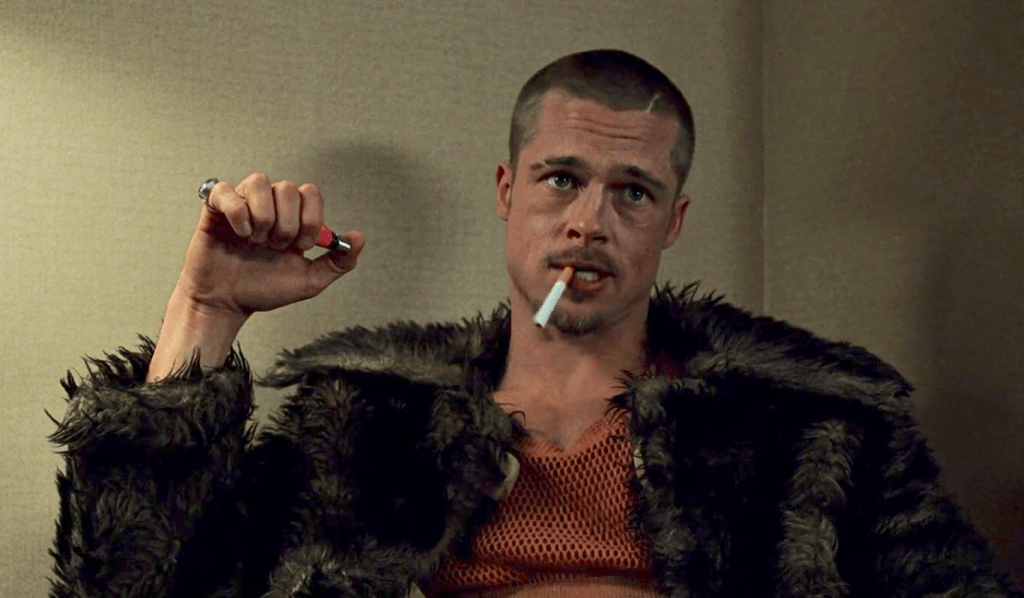
A lot of money went into making this gritty, dark little movie. The budget for Fight Club was $63 million. Fox made it, so it wasn’t exactly a feisty, independent flick. Despite having two stars headlining the film, Fight Club did not do great at the box office. While it was the top movie at the U.S. box office on its first weekend, it saw a 42 percent drop in money for its second weekend. When the movie ended its run, it earned $100.9 million. Sure, that’s a profit, but not the one the studio expected. It also didn’t get any awards love.
Dedication to the DVD experience helped build the movie’s cult

DVDs were still somewhat new at the turn of the millennium, but Fincher was happy to go all-in for the DVD release of Fight Club. From the get-go, they had two versions: one for the film and a “Special Edition” version. They packed the DVDs with content. Even the pared-down version had four different commentary tracks. The Special Edition had commentary tracks, publicity material, music videos, deleted scenes, and more. The Online Film Critics Society gave it awards for Best DVD and Best Special Features, and in 2001, Entertainment Weekly ranked it first on its list of “The 50 Essential DVDs.” No wonder it sold over six million copies in the first 10 years of its release.
Norton and Pitt went method for one scene

In a memorable scene in the movie, the Narrator and Tyler get drunk (to the extent a mental projection can get drunk) and hit golf balls. That scene is as close to a documentary as this film gets, as Norton and Pitt were indeed drunk in real life and hitting those golf balls.
Rosie O’Donnell spoiled the movie for her audience

Spoilers. Some people fear them and detest them. Others don’t mind. Still, you always want to be careful what you say in a public space. Don’t tell that to Rosie O’Donnell, though. Rosie was not a fan of the film and proceeded to spoil the Tyler Durden twist and then told her viewers not to see the movie. This created a lot of discontent among both spoiler haters and Fight Club fans. Pitt even called O’Donnell’s spoiler unforgivable.
Fincher was annoyed by the marketing for the movie

In Fincher’s mind, Fight Club is a satirical film about a lot of things. The marketing team had different ideas. They highlighted the whole “guys wailing on each other” aspect of the film. Additionally, they placed ads on programming like pro wrestling and UFC, believing that was the target audience. Fincher was particularly annoyed by this, feeling that it did not understand his intent with the movie.
The soap company’s name is a reference for the city planners out there

Tyler Durden’s business card states that he works for Paper Street Soap Company. He also later gets a package sent to 420 Paper Street. A “paper street” is a term used to describe a street that is included on maps and in city planning documents but then never gets built.
The Blu-ray release for the movie featured a fake out

Fight Club remained dedicated to the at-home experience when the Blu-ray was released in 2009 for the 10th anniversary of the film. However, when the Blu-ray loads up, you first see a menu screen for the Drew Barrymore romantic comedy Never Been Kissed. While it eventually became the Fight Club menu that was included as a goof on Fight Club fans. Fincher got the OK from Barrymore to use her film for the joke.
 Ալեն կոշկարյան։ Հետազոտական վարժարանի սովորող 12-1 դաս․
Оставьте комментарий