

The Earth is a watery place. But just how much water exists on, in, and above our planet? About 71 percent of the Earth’s surface is water-covered, and the oceans hold about 96.5 percent of all Earth’s water. Water also exists in the air as water vapor, in rivers and lakes, in icecaps and glaciers, in the ground as soil moisture and in aquifers, and even in you and your dog.Water is never sitting still. Thanks to the water cycle, our planet’s water supply is constantly moving from one place to another and from one form to another. Things would get pretty stale without the water cycle!
WHERE DOES WATER COME FROM?
Water on Earth cycles from the oceans, where it evaporates from the surface, into the atmosphere, forms clouds, falls onto the land as rain, travels through wetlands, rivers, lakes and underground then returns to the ocean — collectively known as the hydrologic cycle.
WHY DO COLD WATER BOTTLES AND SOFT-DRINK BOTTLES SWEAT?
The air surrounding the bottle gets cooled by the cold drink. When the air at outside is cooled it cannot hold more moisture. So some moisture condenses and becomes water. This water stays the outside of the bottle and makes us to think the bottle sweats.
WHEN DOES WATER BOIL?
100°C
WHY IS WATER BLUE?
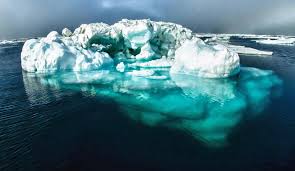
The ocean is blue because water absorbs colors in the red part of the light spectrum. Like a filter, this leaves behind colors in the blue part of the light spectrum for us to see. The ocean may also take on green, red, or other hues as light bounces off of floating sediments and particles in the water.
WHEN IS WATER THE MOST DENSE?
3.98°CWater is densest at 3.98°C and is least dense at 0°C (freezing point). Water density changes with temperature and salinity. When water freezes at 0°C, a rigid open lattice (like a web) of hydrogen-bonded molecules is formed.
| Water Facts |
| Water is made up of two elements, hydrogen and oxygen. Its chemical formula is H2O.Each molecule of water is made up of two hydrogen atoms bonded to a single oxygen atom. The existence of water is essential for life on Earth.Water has three different states, liquid, solid and gas. The word water usually refers to water in its liquid state. The solid state of water is known as ice while the gas state of water is known as steam or water vapor. Water covers around 70% of the Earth’s surface.The three largest oceans on Earth are the Pacific Ocean (largest), the Atlantic Ocean (second largest) and the Indian Ocean (third largest). More ocean facts.Found in the Pacific Ocean, the Mariana Trench is the deepest known point in the world’s oceans.Ocean tides are caused by the rotation of the Earth and the gravitational pull of the Moon and Sun acting on ocean water.Water from a sea or ocean is known as seawater. On average, every kilogram (2.2lb) of seawater contains around 35 grams (1.2 oz) of dissolved salt.The freezing point of water lowers as the amount of salt dissolved in at increases. With average levels of salt, seawater freezes at -2 °C (28.4 °F).The longest river in the world is the Nile River, it reaches 6650 kilometers in length (4132 miles).The second longest river in the world is the Amazon River, it reaches 6400 kilometres (4000 miles) in length.The longest river in the USA is the Missouri River. At around 2,340 miles (3,770 km) in length it is slightly longer than the Mississippi River (2,320 miles). The two combine to form the longest river system in North America.Water makes a good solvent with many sugar, salts and acids easily dissolving in it. On the other hand oils and fats don’t mix well with water.The water cycle involves water evaporating (turning into a gas), rising to the sky, cooling and condensing into tiny drops of water or ice crystals that we see as clouds, falling back to Earth as rain, snow or hail before evaporating again and continuing the cycle. Learn more about the water cycle.Water in the form of ice is found at the polar ice caps of the planet Mars, some scientists have also suggested the possibility of liquid water on the red planet. Pure water has no smell and no taste, it also has a pH level around 7.While most people know that water boils at 100 °C (212 °F), this is at the normal conditions of sea level. The boiling point of water actually changes relative to the barometric pressure. For example, water boils at just 68 °C (154 °F) on the top of Mount Everest while water deep in the ocean near geothermal vents can remain in liquid form at temperatures much higher than 100 °C (212 °F).Water expands as it cools from 4 °C to 0 °C (above 4 °C it does the opposite). In freezing conditions, water has been known to burst water pipes as it freezes to ice.Water can move up narrow tubes against the force of gravity in what is known as capillary action. Most people around the world have access to clean drinking water but it is a major problem in poorer areas of the world. Water pollution and low quality water can lead to dangerous bacteria, disease and viruses . Drinking water is needed for humans to avoid dehydration, the amount you need each day depends on the temperature, how much activity you are involved in and other factors.An important use for water is in agricultural irrigation, this is when water is artificially added to soil in order to assist the growth of crops.Water is used frequently by firefighters to extinguish fires. Helicopters sometimes drop large amount of water on wildfires and bushfires to stop fires spreading and limit the damage they can cause. The water industry helps deliver water to homes in various cities and countries around the world. This can involve services such as purification, sewage treatment, filtering, distillation and plumbing.Electricity can be created from hydropower, a process that uses water to drive water turbines connected to generators. There are many hydroelectric power stations around the world.Water also plays a role in cooking. Steaming and boiling food are well known cooking methods. You may have noticed this last time you made pasta or noodles.Water is also used for fun. Water sports are a very popular recreational activity and include things like swimming, surfing and waterskiing. Ice and snow is also used in ice skating, ice hockey, skiing and snowboarding. |
 Ալեն կոշկարյան։ Հետազոտական վարժարանի սովորող 12-1 դաս․
Оставьте комментарий